Dude Theft Wars FPS Open world
- 4.3
- Rating
- 100.00M
- Installs
- Free
- Price
 Analysis by App-foxy
I spent time with Dude Theft Wars as a deliberately chaotic action game rather than treating it like a serious crime simulator. Its appeal is immediate: you get a loose open-world playground, exaggerated physics, offline activities, and online multiplayer options, all wrapped in a deliberately silly tone. I found it most enjoyable when I stopped looking for a carefully guided campaign and started treating the city as a toy box.
That distinction matters. This is a free game from Poxel Studios Games, rated Teen, and its large audience shows that the basic idea has broad appeal. It has a 4.3 average from around 1.3 million ratings and more than 100 million installs. Those figures suggest a well-known mobile experience, but they do not make it universally comfortable. The same fast, messy style that makes a short session funny can also make navigation, aiming, and reading harder for some players.
How the open world feels to use
I focus on how the open world’s freedom changes the way a session feels: rather than following a fixed route, I can set a small goal, explore at my own pace, and let distractions become part of the fun. That flexibility is useful, but it also means I need to decide what matters in a busy scene. The next section looks at how that trade-off affects readability and navigation.
You May Also Like

 Blood Strike: 2.5 Anniversary
Blood Strike’s Loadouts Turn Every Drop Into a Tactical Gamble
A close look at Blood Strike’s custom loadouts: how fast access to signature weapons reshapes its battle royale rhythm, rewards preparation, and narrows the gap between fights.

 Pandora - Music & Podcasts
Pandora’s Music Is Easy to Start, but Harder to Recover
Pandora’s strength is its low-effort path from a seed to a station. Its weak spot is how much confidence it asks you to place in connection, setup, and quiet recovery.

 8 Ball Pool
 Is Built on Rivalries, Rematches, and Routine
A close look at the rivalries, rematches, shared routines, and unanswered safety questions that turn a quick pool match into a persistent mobile community.

 Samsung Music
’s Quiet Strength Is Playing What You Already Own
Its reach comes less from spectacle than from dependable access to a personal library. That simplicity is both the app’s strongest retention engine and its ceiling.

 AccuWeather: Weather Radar
AccuWeather Review: A Quick, Clear Forecast for Everyday Decisions
For everyday plans, the best forecast is the one you can understand quickly. AccuWeather makes rain timing, radar, and local conditions easy to act on, with a few trade-offs.

 Hill Climb Racing
Why Hill Climb Racing Still Turns Crashes Into One More Run
A tiny car, a bumpy hill and one more upgrade: Hill Climb Racing keeps resurfacing because its simple chaos makes every near-miss feel personal.
More From Our News Desk



Readability and navigation in a deliberately messy city
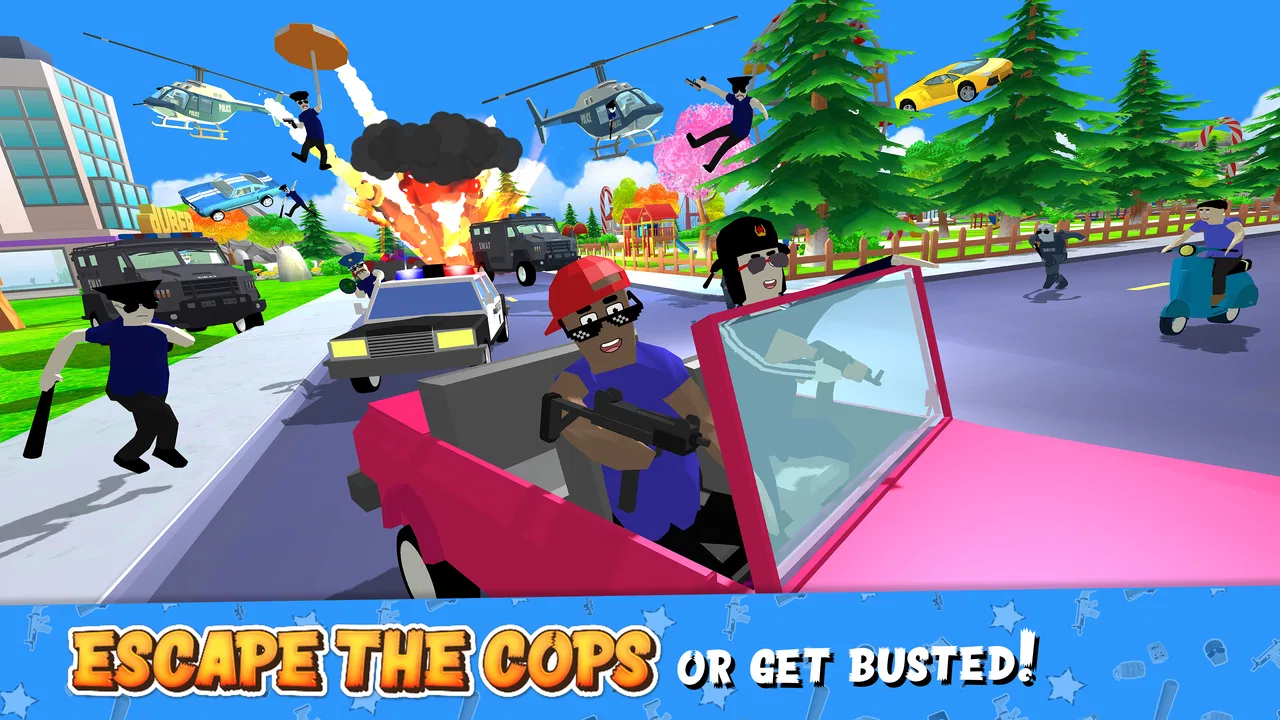
The first thing I noticed was that the game communicates through movement and visual comedy more than through careful explanation. You can walk around, interact with the environment, get into trouble, and experiment with the world without needing to follow a rigid sequence. That freedom is useful for players who dislike long tutorials or complicated menus. I could begin exploring quickly, learn by trying things, and return to the same areas when I wanted a different kind of distraction.
The trade-off is that an open playground can be less readable than a linear action game. When several characters, vehicles, objects, and effects occupy the same space, it is not always obvious what deserves attention. I often had to pause my own plans and work out whether I was following an objective, testing an interaction, or simply causing another bit of chaos. That uncertainty is part of the humor, but it can feel tiring if you prefer clear goals and predictable routes.
For a new player, I recommend spending the first session exploring without worrying about efficiency. Learn how the camera behaves, how movement feels, and which parts of the environment are useful before trying to complete anything quickly. This approach reduces the pressure to read every prompt immediately. It also reveals one of the game’s less obvious strengths: the world is more enjoyable when you use it as a space for small experiments rather than rushing through it like a conventional mission-based shooter.
On a small phone, visual clutter can become more noticeable. Characters and objects may compete for attention, and a player who needs larger text or more visual separation may have to rely on trial and error. I would have preferred a more consistently calm presentation, especially when the screen becomes busy. Still, the cartoon-like tone helps in one respect: the game is not aiming for realistic visual detail, so its strange situations are usually easy to recognize even when the scene is crowded.
Movement, aiming, and motor effort
The controls ask for several kinds of input at once. You need to move, turn the viewpoint, respond to the environment, and sometimes act quickly when the situation changes. I found this manageable after practice, but it is not equally comfortable for everyone. Players who have limited finger movement, tremors, reduced precision, or difficulty coordinating multiple touch areas may find fast encounters more demanding than the playful presentation suggests.
The offline side is especially helpful here because it gives you room to learn at your own pace. You can use a quiet session to test movement and camera control without the social pressure of competing with other people. That makes the game more approachable for someone who wants to build confidence gradually. It also creates a practical routine: explore first, practice one action at a time, and only then try a busier activity or multiplayer match.
One useful trade-off is the difference between freedom and control. The open setting lets you approach situations in your own way, but it does not always provide the precision of a tightly designed competitive shooter. If you want exact aiming, highly disciplined movement, and a carefully balanced battlefield, a more traditional action game will probably suit you better. Here, imperfect control can become part of the joke, but it can also turn a simple task into an exercise in repeated correction.
I would also avoid judging the game during the first few minutes. The unusual physics and loose interactions can feel awkward before they become entertaining. A player with motor limitations may want to use shorter sessions, hold the phone in a stable position, and choose offline play while learning. Those are not magic solutions, but they reduce the number of things demanding attention at the same time.
Sound, visual intensity, and sensory comfort
The game’s humor depends on sudden action, exaggerated reactions, and a world that can become noisy in a visual sense. That energy is enjoyable when I am in the mood for it, but it is not an especially calm experience. Players who are sensitive to rapid movement, crowded scenes, or abrupt changes may prefer to play in brief bursts rather than treating it as a long relaxing session.
The Teen rating is important for families deciding whether it fits a younger player. This is not a gentle child-focused sandbox simply because its style is cartoonish. I would check the game personally before handing it to a child, and I would also consider whether the combination of action, online play, and in-app purchases is appropriate for that player. The rating should be treated as a starting point for that decision, not as a substitute for supervision.
Sound can also affect how approachable a session feels. In a busy action game, audio may help communicate that something is happening, but players who need quiet or who play in shared spaces may prefer using the game only when they can control their surroundings. I would not choose it as my first recommendation for someone seeking a low-stimulation mobile game. Its personality comes from disorder, and reducing that disorder can also reduce part of its charm.
There is a positive side to the visual style. The game does not ask me to study realistic scenery for long periods to understand the joke. Its absurdity is generally direct, and the broad shapes of the world are easier to grasp than a highly detailed realistic environment. That can help players who find realistic action games visually exhausting. The benefit is limited, though, because clarity can disappear when too many moving elements overlap.
When the game works best in everyday life
I see the strongest use case as a short, flexible break. Imagine waiting for an appointment with enough time for a few attempts but not enough time to commit to a long story mission. The offline activities let you open the game, create your own objective, and stop when your time is up. I might spend one session simply learning the streets, another trying to reach a location without getting distracted, and another testing how much trouble I can cause before returning to normal play.
That structure is more practical than it sounds. Many mobile games punish interruptions or expect a long uninterrupted run. This one is better suited to a player who wants a self-contained burst of nonsense. The lack of a serious narrative obligation means I do not feel guilty about closing it suddenly. If you are commuting, waiting, or taking a short break between tasks, that flexibility is a genuine advantage.
Online multiplayer changes the situation. It can make the game feel more social and unpredictable, but it also adds timing pressure and more sensory activity. Someone who needs frequent pauses, cannot react quickly, or prefers complete control over the pace may be happier staying offline. I would begin with the solo experience even if multiplayer is the main reason you are curious, because it gives you a better sense of whether the controls and visual style work for you.
Another practical use is casual play with a friend who enjoys improvisation more than winning. The game is a better match for joking around and comparing strange moments than for serious competitive improvement. If your group wants a precise esports-style contest, there are stronger alternatives. If your group wants to laugh at unexpected situations, the loose design gives everyone more opportunities to create their own stories.
Where it compares with other action games
Compared with a conventional mobile shooter, this game gives up some precision and structure in exchange for freedom and comedy. A traditional shooter usually makes the objective, weapon handling, and match rules easier to understand. That is better for players who want measurable improvement or a clean competitive loop. Dude Theft Wars is more appealing when the goal is to explore, experiment, and see what happens when the world stops behaving seriously.
Compared with a large open-world game built around a detailed story, it is lighter and less demanding in commitment. I do not need to treat every activity as part of a carefully written campaign. That makes it easier to pick up, but it also means the experience can feel less polished or emotionally involving than a story-led alternative. The world is there for playful interaction first, not for a deep dramatic journey.
Compared with a calm sandbox, the action focus makes it more energetic and less suitable for quiet creative play. Its free price removes an initial barrier, although optional purchases range from $0.99 to $12.99 per item. I would keep that in mind if the device is shared with a child or if you prefer games with no purchase prompts. The game can be approached without paying, but free access does not automatically mean a friction-free experience.
Remaining barriers and who may want to skip it
The biggest barrier is the combination of loose controls, busy action, and inconsistent predictability. Those qualities are central to the game’s personality, so I would not expect a setting to transform it into a slow, highly controlled experience. Players who need stable camera movement, very clear objectives, or low-pressure timing may become frustrated even after learning the basics.
Navigation can also be challenging for anyone who depends on strong visual hierarchy. When the environment is full of distractions, deciding what to do next may require more attention than the actual action. I found that stopping to reorient myself was often more useful than forcing my way forward. That is a workable habit for me, but it may not be comfortable for someone who needs consistent guidance.
Online play introduces another layer of uncertainty. The game’s multiplayer appeal comes from interaction and unpredictability, yet those same qualities can make it harder to control the pace or sensory load. I would skip multiplayer if you need a reliably quiet environment, need to pause frequently, or dislike situations where other players influence what happens next. Offline play is the more inclusive starting point because it gives you greater control over timing.
I would also skip the game if your main goal is a realistic open-world simulation. The title’s identity is built around exaggeration and silliness, not authenticity. Likewise, players who dislike cartoon violence, chaotic humor, or the possibility of spending on optional items should look elsewhere. A more structured action game may be a better choice for focused practice, while a peaceful sandbox may be better for relaxation.
My inclusive verdict
After using it as both an action game and a casual open-world toy, I think it succeeds when you accept its rough edges. Poxel Studios Games has made something that is easy to start, free to download, and flexible enough for short offline sessions or more social online play. The current version is 0.9.0.9f6, and the game remains attractive to people who want quick absurdity rather than a carefully managed adventure.
Its accessibility is situational rather than comprehensive. The open world and offline option help players who need to set their own pace, while the humorous visual language makes the basic idea approachable. At the same time, touch-heavy movement, crowded scenes, sudden action, and multiplayer unpredictability create real barriers for players with motor or sensory needs. I would test it in a quiet offline session before deciding whether it belongs in your regular rotation.
My recommendation is simple: choose it if you want a mischievous playground that can fill ten minutes with improvised action, and if you are comfortable learning controls through experimentation. Choose another action game if you need precise competitive mechanics, calm presentation, or strong step-by-step direction. For me, the best way to enjoy it is to treat every session as a small experiment, keep expectations realistic, and use offline play whenever control and comfort matter more than chaos.
The most inclusive way to approach it is to begin slowly, play offline, and let your own comfort decide how much of the mayhem you want.
FAQs for Dude Theft Wars FPS Open world
01What is Dude Theft Wars FPS Open World about?
Dude Theft Wars FPS Open World is a sandbox game that combines elements of first-person shooting and open-world exploration. Players can roam freely in a city, engaging in activities ranging from driving cars to completing missions. Its quirky humor and engaging gameplay make it a popular choice among fans of open-world games.
02Is Dude Theft Wars free to play?
Yes, Dude Theft Wars FPS Open World is free to download and play. However, it contains in-app purchases which allow players to buy additional content or remove ads. These are optional and the game can be enjoyed without spending money, though some players may find the purchases enhance their experience.
03What are the system requirements for Dude Theft Wars?
Dude Theft Wars FPS Open World runs on both Android and iOS devices. For Android, a version 4.4 or higher is recommended, while iOS users should have iOS 9.0 or later. Adequate storage space is also necessary to ensure smooth gameplay, as the game features extensive graphics and open-world elements.
04Are there any multiplayer options in Dude Theft Wars?
Yes, Dude Theft Wars offers multiplayer modes where players can engage in various activities with friends or other online players. This feature adds a social aspect to the game, allowing for collaborative missions or competitive gameplay. A stable internet connection is essential for seamless multiplayer experiences.
05What makes Dude Theft Wars different from other open-world games?
Dude Theft Wars stands out due to its unique blend of humor, cartoonish graphics, and diverse activities. Unlike many open-world games focused on serious themes, Dude Theft Wars offers a light-hearted, comedic take on the genre. This approach, combined with its diverse gameplay mechanics, provides a refreshing experience for players.
Pros
- Engaging open-world gameplay
- Fun
- quirky humor throughout
- Variety of vehicles and weapons
- Easy-to-learn controls
- Regular updates with new content
Cons
- Graphics can be glitchy at times
- Occasional in-game ads
- Limited character customization
- Can be laggy on older devices
- Some missions can feel repetitive

Dude Theft Wars FPS Open world
Gallery